A damaged caravan sale example is often more useful than general advice when you are looking at a caravan with a leaking roof, soft floor, accident damage or a problem that has left it sitting unused. The key point is simple: damage affects the price, but it does not automatically prevent a sale. A realistic buyer will assess what is there, what can be repaired and what collection involves, then make a clear offer.
Consider a typical situation. A family owns a 2011 twin-axle touring caravan that has been parked on their drive for two years. A failed roof seal allowed water into the front locker area, creating damp around one front corner. The caravan is towable for a short distance, but the floor feels soft near the entrance and the owner has no recent service records. They have been quoted several thousand pounds for repairs and do not want the uncertainty of advertising it privately.
That is not an unusual position to be in. For many owners, the question is not whether the caravan is perfect. It is whether selling it as it stands is more sensible than spending money on repairs before sale.
Damaged caravan sale example: how the valuation works
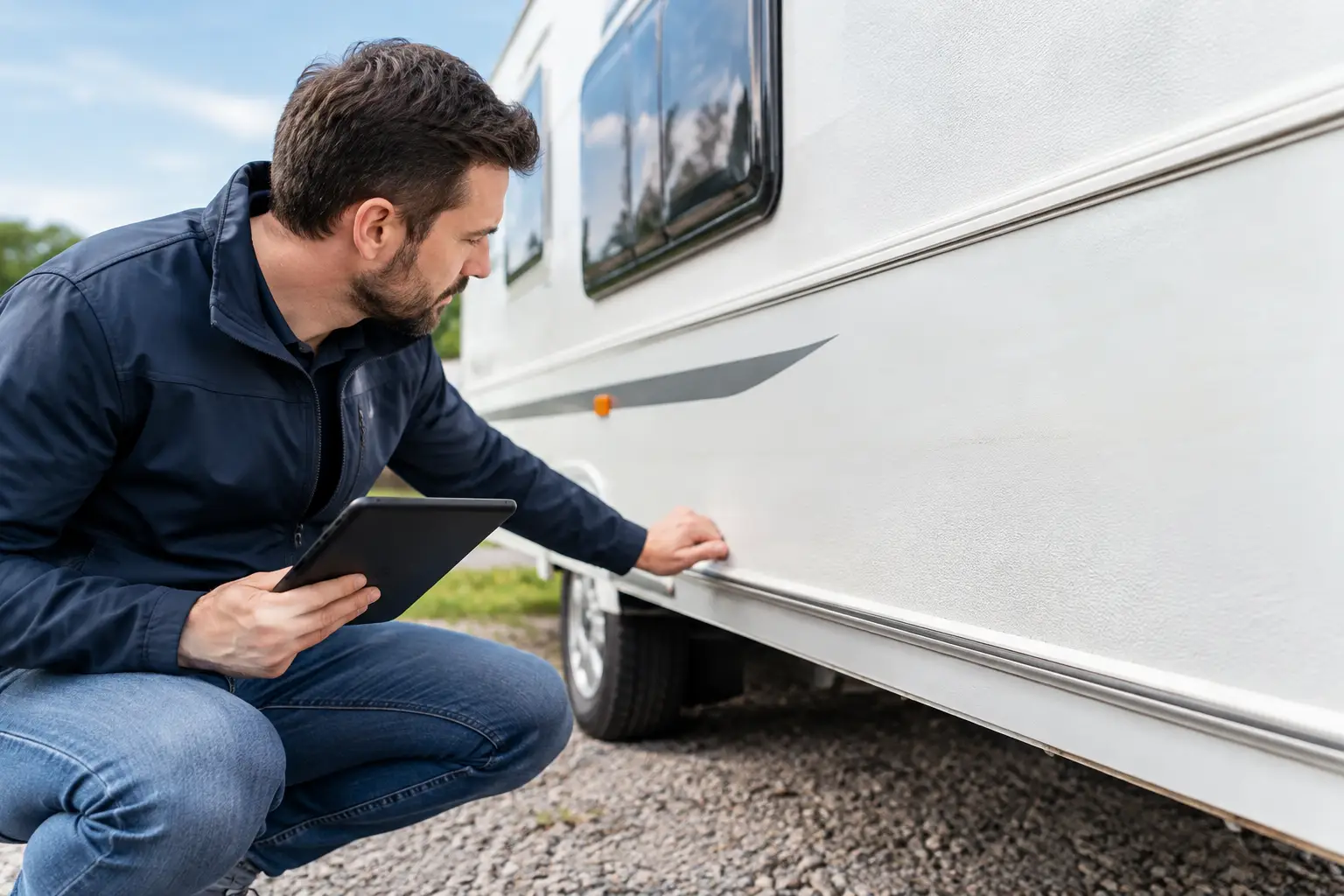
In this example, the owner contacts a direct caravan buyer and describes the make, model, year, layout and location. They also explain the water ingress, soft floor and missing paperwork. Clear photographs of the exterior, interior, damaged areas, tyres, identification plate and any visible damp staining help the buyer understand the caravan before arranging collection.
A fair valuation is based on the value of an equivalent clean, usable caravan, less the likely cost, time and risk involved in repair. Age, specification, popular layouts, number of berths, condition of the chassis, tyres and appliances all matter. So does whether the caravan can safely be moved.
The offer will naturally be lower than the price of a dry, fully serviced example. That is the trade-off. But it should reflect the caravan’s actual condition, rather than relying on an optimistic private-sale asking price that may lead to weeks of messages, viewings and buyers trying to negotiate after they arrive.
In our example, the buyer explains that the damp may be repairable, but the extent of hidden timber damage cannot be confirmed from photographs alone. The valuation therefore allows for uncertainty. The owner receives a competitive cash offer based on the information supplied, subject to the caravan matching that description when collected.
That final point protects both sides. If a seller has been open about faults, there should be no unpleasant surprise or last-minute reduction simply because the caravan is damaged. Equally, a buyer needs to know if there is further structural damage, a missing axle, a serious chassis issue or an insurance write-off that was not mentioned during the valuation.
Which types of caravan damage can still be sold?
Owners sometimes assume that a caravan has no value because it has failed a damp check or needs major work. In practice, different buyers may see value in repair, refurbishment, resale, components or parts. The condition determines the offer, not whether a sale is possible.
Water ingress and damp are among the most common concerns. Staining, a musty smell, swollen wallboard, soft floors and damaged seals can all reduce value substantially, particularly where the structure needs attention. However, an older caravan with a sound chassis, usable appliances and a sought-after layout may still be worth buying as it stands.
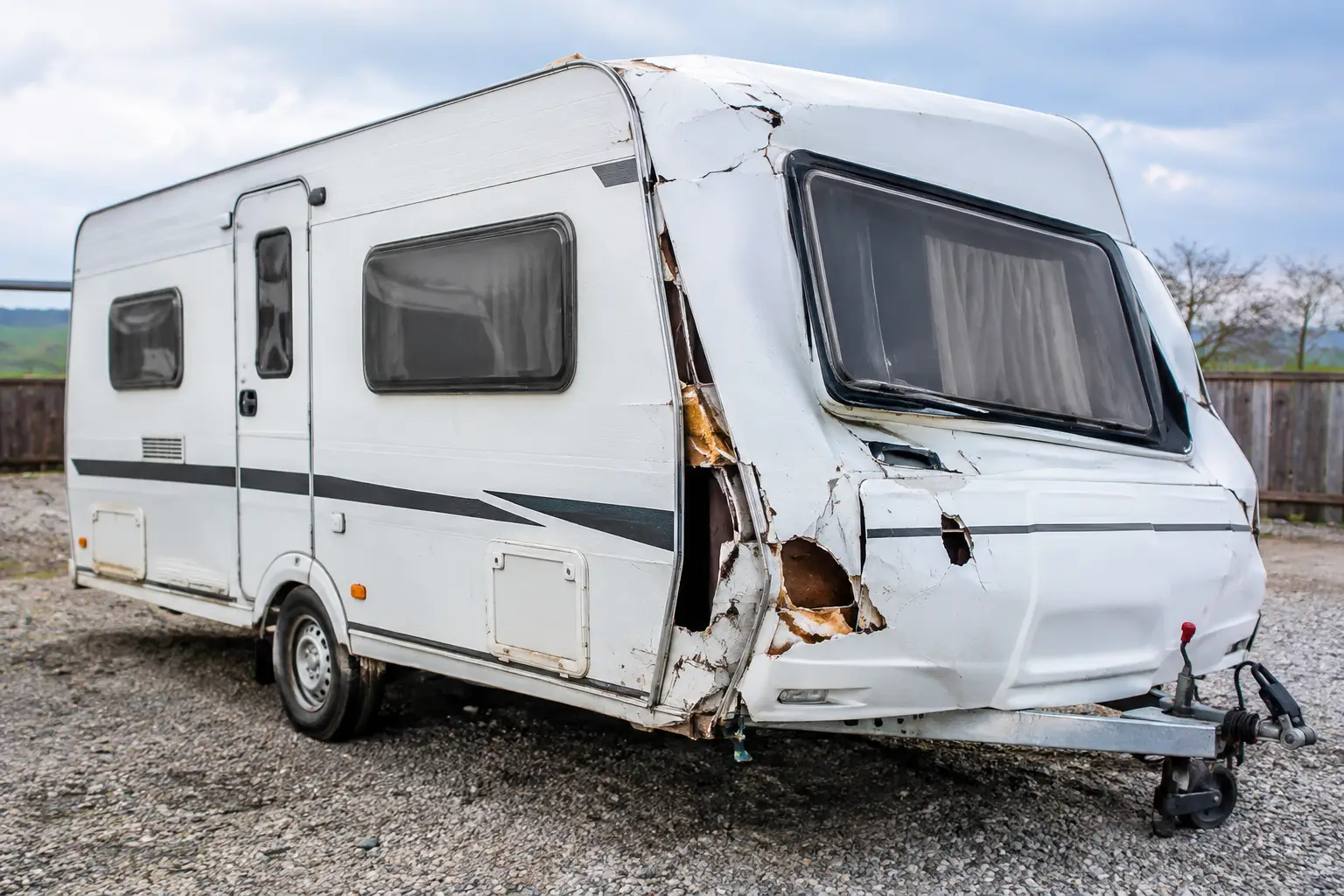
Accident damage is another common reason for a straightforward direct sale. A cracked front panel, damaged corner, broken window or dented side can make a private buyer nervous, even if the caravan remains usable. More serious impact damage may affect the chassis, suspension or towing safety, so it is best to describe it accurately and avoid moving the caravan unless it is safe to do so.
Electrical faults, failed appliances, worn tyres, broken lights and an incomplete service history are also manageable. They all influence value, but they do not need to become a lengthy repair project if your priority is a quick, certain sale. The same applies to caravans that have been off the road for years, have mould from storage, or cannot currently be towed.
Should you repair a damaged caravan before selling?
It depends on the repair. Replacing a small rooflight, fitting a new battery or cleaning the caravan thoroughly may make it easier to assess and could improve its appeal. Spending thousands on structural damp repairs before selling is a different decision.
A repair bill does not always translate into an equal increase in sale value. On an older caravan, a full damp repair can exceed the difference between its damaged value and its value once repaired. There is also the risk that work reveals further problems behind the panels or under the floor.
Before authorising expensive work, ask for a written repair estimate and compare it with the likely value of a similar caravan in good condition. Be realistic about your own time as well. If the caravan is taking up space, causing worry or forming part of an estate, a lower but immediate offer can be the more practical outcome.
For the owner in this damaged caravan sale example, the repair quote is more than they are comfortable spending. They decide not to chase a private buyer or fund work with no guaranteed return. Instead, they accept an as-seen offer that gives them a definite figure and a collection date.
What happens on collection day?
A professional collection should be calm and clear, particularly where the caravan is damaged or non-running. The buyer checks that the caravan is the one described, confirms its condition and makes sure it can be loaded or recovered safely. If it is not towable, specialist transport may be needed rather than simply attaching it to a vehicle and hoping for the best.
Once the agreed condition is confirmed, payment should be made by instant bank transfer before the caravan is handed over. The seller can check that cleared funds have arrived in their account before releasing keys, documents or the caravan itself. This is a far safer arrangement than accepting a promise of payment, a cheque or an unfamiliar payment method.
The ownership transfer should then be dealt with properly. Where a V5C is available, the change of keeper can be completed with the seller’s details recorded correctly. If the document has been lost, do not assume the caravan cannot be sold. Tell the buyer at the start so the right process can be discussed. Keep a written record of the sale, the date, the registration number or VIN, and the agreed price.
In our example, the caravan is collected from the owner’s drive. The buyer brings suitable recovery equipment, pays by bank transfer on collection and assists with the paperwork. There are no advertising costs, no awkward viewings and no need for the owner to arrange transport for a caravan with a soft floor and suspected damp.
Details that help you get an accurate offer
Being upfront is the best way to avoid wasted time. A buyer does not need a perfect sales description, but they do need useful facts: the caravan’s make, model, year, registration if applicable, number of berths, location, known faults and whether it can be moved. Photographs are particularly helpful where there is visible damage.
Mention any finance agreement, insurance claim, missing keys, missing V5C, known damp report or towing issue early on. Outstanding finance does not always stop a sale, but it must be settled correctly as part of the transaction. A good buyer will explain what information they need rather than leaving you to work it out alone.
WR Motorhomes buys touring caravans across Scotland in all conditions, including damp, accident-damaged, non-running and older examples. The aim is not to pretend damage does not matter. It is to provide a fair, straightforward route out when repairing or privately selling the caravan no longer makes sense.
If your caravan has become a project you did not choose, start with an honest description and a no-obligation valuation. A clear offer, free collection and payment before handover can turn an awkward damaged vehicle into one less thing to worry about.