A caravan damp assessment can be the moment an ordinary sale becomes a difficult one. You may have noticed a soft patch by a window, a musty smell after winter storage, staining in a locker, or simply been told that the readings are high at a service. None of this automatically makes your caravan worthless, but it does affect its value and the best way to sell it.
For owners who no longer want the expense or uncertainty of repairs, an honest assessment gives you a clear starting point. It helps distinguish a small, contained issue from wider water ingress, and it means you can describe the caravan accurately to any potential buyer.
What a caravan damp assessment actually checks
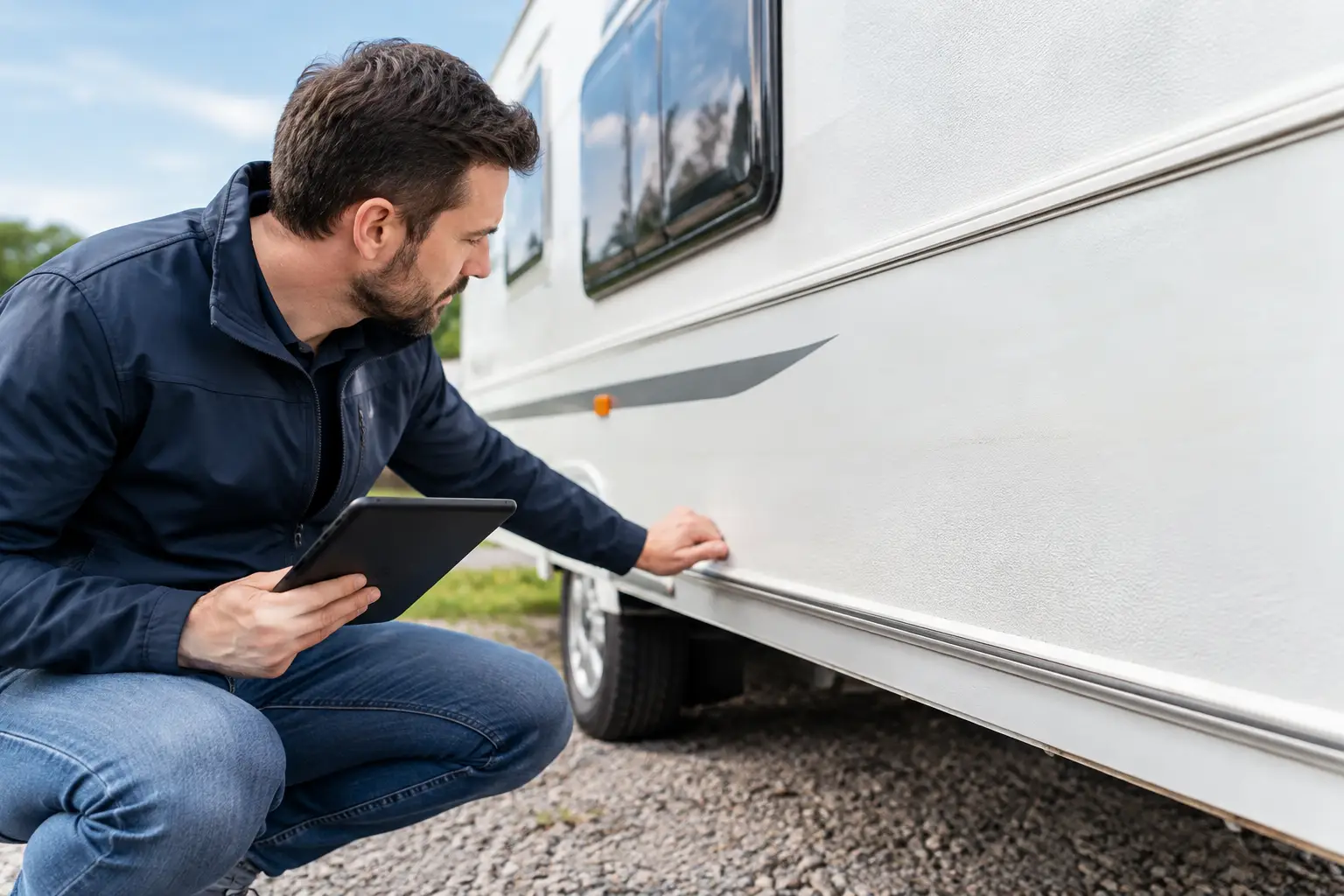
A damp assessment is a structured inspection for moisture inside the caravan’s walls, roof, floor and furniture. The assessor will usually use a moisture meter around known risk areas, including windows, roof lights, door frames, awning rails, service hatches, corner mouldings and external joints.
They will also look for physical signs that water has been present for some time. These can include wallboard that feels soft or rippled, discolouration, lifting wallpaper, mould, swollen cupboard panels, rusted fittings and a floor that gives underfoot. The aim is not just to find a high reading, but to establish where water may be getting in and how far the damage has travelled.
Readings need interpreting sensibly. A moisture meter is a useful diagnostic tool, not a final repair quotation on its own. Surface materials, metal fixings and cold conditions can influence a result. A capable assessor compares readings across the panel, checks the surrounding area and considers the caravan’s age, construction and visible condition.
Why damp is a bigger issue than a cosmetic mark
Caravans are built from layered materials. When water gets past a seal, it can soak into timber framework and insulation behind the interior wallboard long before obvious damage appears. A small mark beside a window might be localised, but it might also be the visible edge of a larger problem hidden behind furniture or within a corner panel.
The main concern is not appearance. Persistent moisture can weaken the structure, damage the floor, encourage mould and make the caravan less safe or less practical to use. Repairs may involve removing interior panels, drying the affected area, replacing rotten timber, resealing the exterior and rebuilding the inside. That labour is often what makes damp repairs costly.
There is no single figure that applies to every caravan. A failed seal caught early could be relatively straightforward. Damp across multiple walls, around roof lights or through a floor can require extensive work. On an older touring caravan, the likely repair bill may be more than the increase in resale value afterwards.
When should you arrange a damp assessment?
If you are keeping the caravan, a professional assessment is sensible when you spot a change in the interior, suspect a leak or are buying a used caravan. Regular servicing can also identify sealing issues before they turn into major structural damage.
If you are selling, an assessment is most useful when it answers a question you genuinely need resolved. Perhaps a buyer has raised concerns, you have found a soft wall, or you need to decide whether repair is worthwhile. A recent written report can give a private buyer confidence where readings are acceptable, or help both parties understand the scale of a known issue.
That said, do not feel obliged to spend money chasing a report if you already know the caravan has significant damp and you want a straightforward sale. A specialist buyer can assess the condition as part of their valuation. In that situation, clear photos, an honest description and any previous service paperwork are often more useful than paying for inspections you do not need.
Preparing for a caravan damp assessment
There is no benefit in trying to disguise the condition. Strong air fresheners, freshly applied sealant or attempts to dry out obvious damp with a heater may hide clues temporarily, but they do not fix the cause. They can also make a buyer understandably cautious if the issue emerges later.
Instead, make the caravan accessible. Remove personal belongings from cupboards and lockers, lift loose rugs, open the seating storage and ensure the assessor can inspect corners and window areas. If you have service records, previous damp reports, repair invoices or details of any resealing work, keep them to hand.
Try to give a full account of what you know. Mention when you first noticed the issue, whether the caravan has been stored under cover, any past leaks and whether it has been used recently. A caravan that has sat unused for several years can have problems that are not immediately obvious, particularly around seals that have dried out or deteriorated.
Repair, sell as seen, or sell directly?
The right answer depends on the caravan’s value, age and the severity of the damp. If the issue is small, the caravan is otherwise desirable and you plan to use it for years, repairing it through a reputable workshop may be a sensible choice. Keep the paperwork, as it may help when you sell later.
For a caravan you are ready to move on from, repairs are not always the best financial decision. It is easy to focus on getting the caravan back to perfect condition, but the work can uncover additional damage once panels are removed. You may also face storage costs while waiting for a workshop slot.
Selling privately can achieve a higher price in some cases, but it comes with responsibilities. You should disclose known damp and avoid vague phrases that could mislead a buyer. Expect buyers to negotiate hard, request inspections and walk away if they are not comfortable with the risk. A sale described as “sold as seen” does not remove the need to be truthful about faults you know about.
A direct sale to an experienced vehicle buyer is often more practical for caravans with extensive damp, failed floors, incomplete history or no current use. The offer will reflect the condition and likely repair work, but you avoid advertising, repeated viewings, payment worries and the challenge of arranging transport for a caravan that is no longer roadworthy.
Information that helps you get a fair valuation
A damp caravan can still be valued properly when the facts are clear. Be ready to provide the make, model, year, layout, registration number and overall condition. Photos of the exterior, interior, affected areas, tyres and any damage help a buyer make a realistic initial assessment.
It is also useful to say whether the caravan is towable, where it is stored and whether you have the V5C. Missing paperwork or a flat tyre does not necessarily prevent a sale, but it may affect collection arrangements. If there is outstanding finance, say so at the start. It can often be settled as part of the transaction, provided the figures are confirmed.
At WR Motorhomes, damp and water-damaged caravans are considered on their actual condition, not dismissed because they are difficult to sell privately. A realistic offer should be clear about why it has been made, with no fees or hidden costs added later. Collection and payment arrangements should also be agreed before the caravan leaves you.
A practical word on safety and storage
Until you decide what to do, do not ignore an active leak. Remove soft furnishings if they are wet, ventilate the caravan when weather allows and avoid using mains electrics if water may have reached sockets, wiring or appliances. If the floor feels unsafe, do not keep walking over the affected area.
Avoid covering a damp caravan tightly with a non-breathable cover. Trapped moisture can make mould and condensation worse. A dry, ventilated storage position is preferable while you arrange an inspection, repair or sale.
A caravan damp assessment is not bad news for its own sake. It is useful information that lets you make a sensible decision, whether that means repairing a caravan you still enjoy or selling it honestly without taking on more cost and hassle than the vehicle is worth.