Selling a touring caravan is not quite the same as selling a car. There is usually no DVLA V5C to transfer, which catches many owners out. This caravan ownership transfer guide explains what proves ownership, what paperwork to prepare, and how to hand over your caravan safely once the money is cleared.
The process is straightforward when you know what matters. The key is to create a clear paper trail, check that the buyer is genuine, and never let the caravan leave until payment has reached your bank account.
First, understand which documents apply
Most touring caravans are not registered with the DVLA, so they do not have a V5C log book. That means you cannot complete a standard DVLA keeper transfer in the way you would for a car, van or motorhome.
Instead, ownership is normally evidenced by a combination of the original purchase invoice, service records, a written sales receipt and the caravan’s unique Vehicle Identification Number, usually known as the VIN or chassis number. The VIN can normally be found on the chassis, on the manufacturer’s plate and sometimes etched into windows.
Many newer touring caravans are also recorded on the Caravan Registration and Identification Scheme, commonly called CRiS. This is a useful security and identification record, but it is not the same as a DVLA registration document. If your caravan has CRiS paperwork, check the current transfer process before the sale and give the buyer the information they need to update the keeper record.
A motorhome is different. Because it is road-registered, its V5C must be transferred through the DVLA. If you are selling a motorhome rather than a touring caravan, make sure the registered keeper details are updated promptly after collection.
Gather the paperwork before advertising or agreeing a sale
Having your documents ready makes you look organised and helps prevent delays at collection. It also gives a serious buyer more confidence that the caravan is legitimately yours to sell.
Try to gather the following before the handover:
- Your original purchase invoice or any previous bill of sale
- The CRiS document, if your caravan is registered with the scheme
- Service history, habitation checks, damp reports and repair invoices
- Manuals, warranty information, spare keys and security device certificates
- Evidence that any outstanding finance has been settled
Do not worry if some paperwork is missing. Older caravans, inherited caravans and long-unused units often have gaps in their history. A missing service book does not stop a sale, but be honest about what you have and what you do not. A buyer can make a fair decision when the condition and paperwork are described clearly from the outset.
Check the caravan identification number carefully
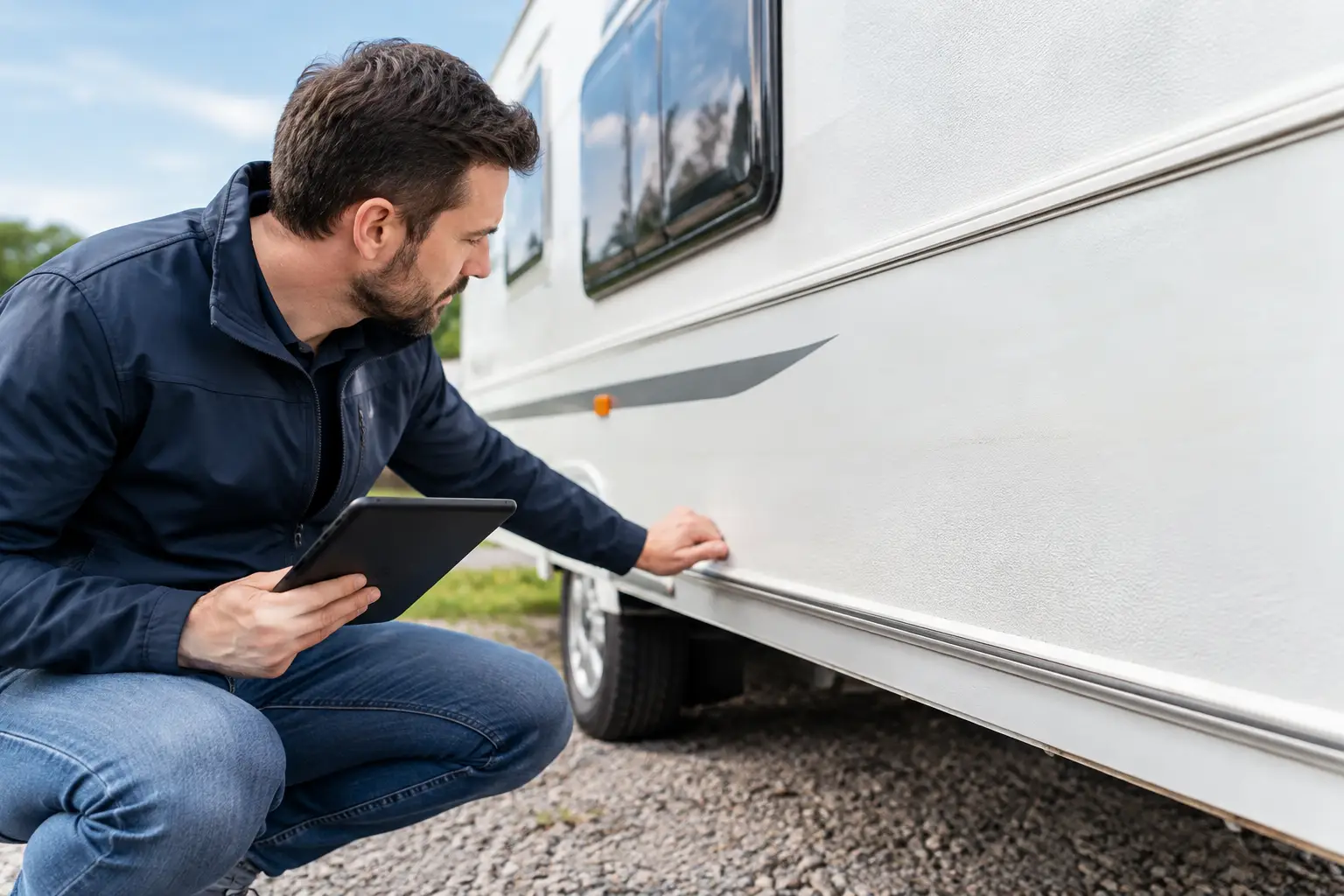
Before anyone arrives, find the VIN and compare it with your paperwork. Take a clear photograph for your own records, but avoid posting the full number publicly in an advert.
The VIN is one of the most useful ways to establish that the caravan being collected is the caravan described in the sale paperwork. If a buyer raises a concern about a mismatched number, do not brush it aside. Stop and investigate it. A discrepancy could be a simple recording error, but it needs resolving before ownership changes hands.
It is also sensible to check whether the caravan has a security marking system, tracker or wheel clamp registered in your name. Keep any codes, fobs and certificates together for the buyer. If a tracker subscription is active, ask the provider how it can be cancelled or transferred.
Write a proper bill of sale
A written receipt is the centrepiece of a touring caravan ownership transfer. It protects both parties by recording exactly what has been sold, for how much and on what date.
The document does not need complicated legal wording. It does need accurate details. Include the full names and addresses of the seller and buyer, the caravan make, model, year, VIN, registration mark if it has one, sale price, date and time of handover. List any meaningful included items, such as an awning, motor mover, leisure battery, solar panel, hitch lock or water equipment.
You should also record the caravan’s known condition. For example, state whether there is damp, damage, failed appliances, tyre deterioration, water ingress, missing documents or an outstanding repair requirement. Avoid vague phrases such as “perfect condition” unless that is genuinely supportable. Clear wording reduces the chance of an argument after collection.
Both parties should sign and date two copies, with each keeping one. If the sale is arranged remotely, photographs of the signed receipt and a confirmation by message can provide an additional record, although a paper copy remains worthwhile.
Be careful with “sold as seen”
A private seller can state that a caravan is sold as seen, but this is not a licence to hide known faults or misdescribe it. Be upfront about significant issues. If the caravan has damp, accident damage, a failed MOT-related tow issue, or has been standing for years, put it on the receipt and price it accordingly.
That approach is especially useful where a caravan is being sold for repair, spares or refurbishment. The right buyer may still be interested, but they should know exactly what they are taking on.
Settle finance before transferring ownership
If the caravan is on hire purchase, PCP, conditional sale or secured finance, you may not have the right to sell it until the agreement is settled. Contact the finance provider and ask for a written settlement figure.
Some direct buyers can help arrange a settlement as part of the transaction, but the figures must be agreed in advance. Do not assume that handing over a caravan removes the debt from your name. Obtain confirmation that the finance has been cleared and keep it with your sale records.
This also applies if the caravan is inherited or jointly owned. Make sure the person selling has authority to do so. Where an estate is involved, the executor may need to provide relevant documents. Where two names are connected to the purchase, it is sensible for both parties to agree to the sale in writing.
Make payment security part of the handover plan
The safest arrangement is cleared bank transfer before the caravan, keys and paperwork are released. Check your banking app or online account yourself. Do not rely on a screenshot, an email confirmation or a buyer saying the transfer is pending.
For higher-value caravans, some owners prefer to meet at a bank during opening hours. That can be reassuring, though it is not essential if you can verify cleared funds directly. Cash creates its own risks, including counterfeit notes and the challenge of securely banking a large amount.
Never release the caravan because a buyer promises to send the balance later. Equally, be wary of overpayment stories, courier arrangements, requests for refunds to another account, or pressure to complete the deal quickly without documentation. A genuine buyer will understand why you want payment and paperwork handled properly.
Prepare for a safe collection day
A touring caravan must be collected legally and safely. The buyer should arrive with a suitable towing vehicle, a compatible towbar and electrics, and the correct licence entitlement. They should also have insurance in place before towing it away.
Before collection, remove all personal belongings. Check lockers, roof cupboards, under-seat storage, the front gas locker and any external compartments. Cancel or transfer your caravan insurance after the sale is complete, not before. If the caravan is stored on a site, notify the site owner or manager that ownership has changed and check whether any storage agreement needs to be updated.
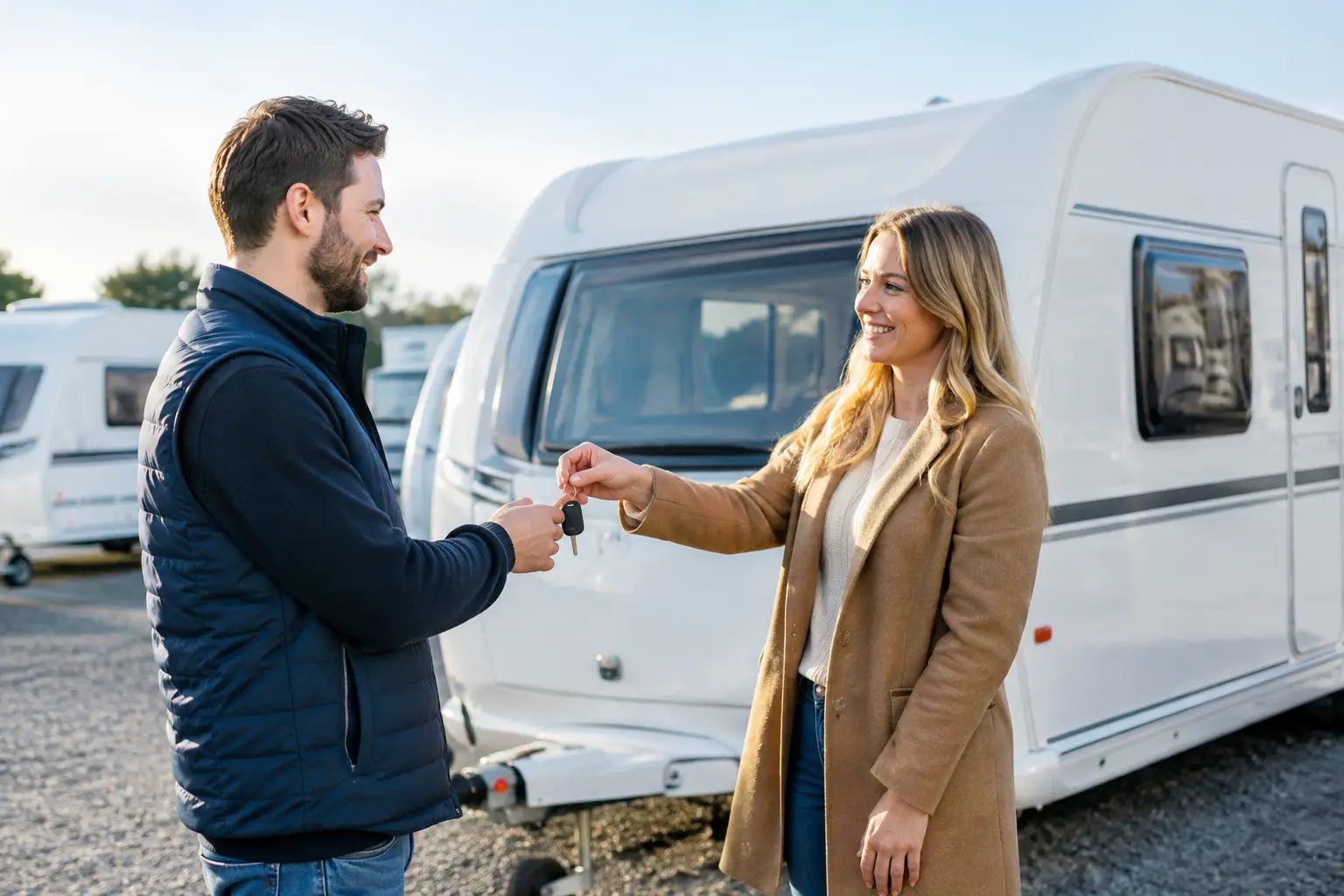
Walk around the caravan with the buyer before handover. Confirm its condition, show them the VIN location, hand over keys and documents, then complete the signed receipt once funds have cleared. Take a final photograph of the caravan at collection if you wish, particularly if it is being towed away by someone you do not know.
When a direct sale makes more sense
A private sale can work well for a clean, desirable caravan when you have time to advertise it, answer enquiries and manage viewings. It may be less appealing if the caravan is damaged, damp, non-running, stored a long distance away or simply no longer worth the effort of selling privately.
In those situations, a professional direct buyer can make the ownership transfer simpler. WR Motorhomes buys touring caravans across Scotland in all conditions, with a clear offer, free collection and payment by bank transfer before the caravan is released. The team can also explain what paperwork is available and what records should be retained after the sale.
Keep your signed receipt, payment confirmation and any finance settlement letter somewhere safe after collection. A few careful checks at the handover give you the confidence to move on from caravan ownership without loose ends.