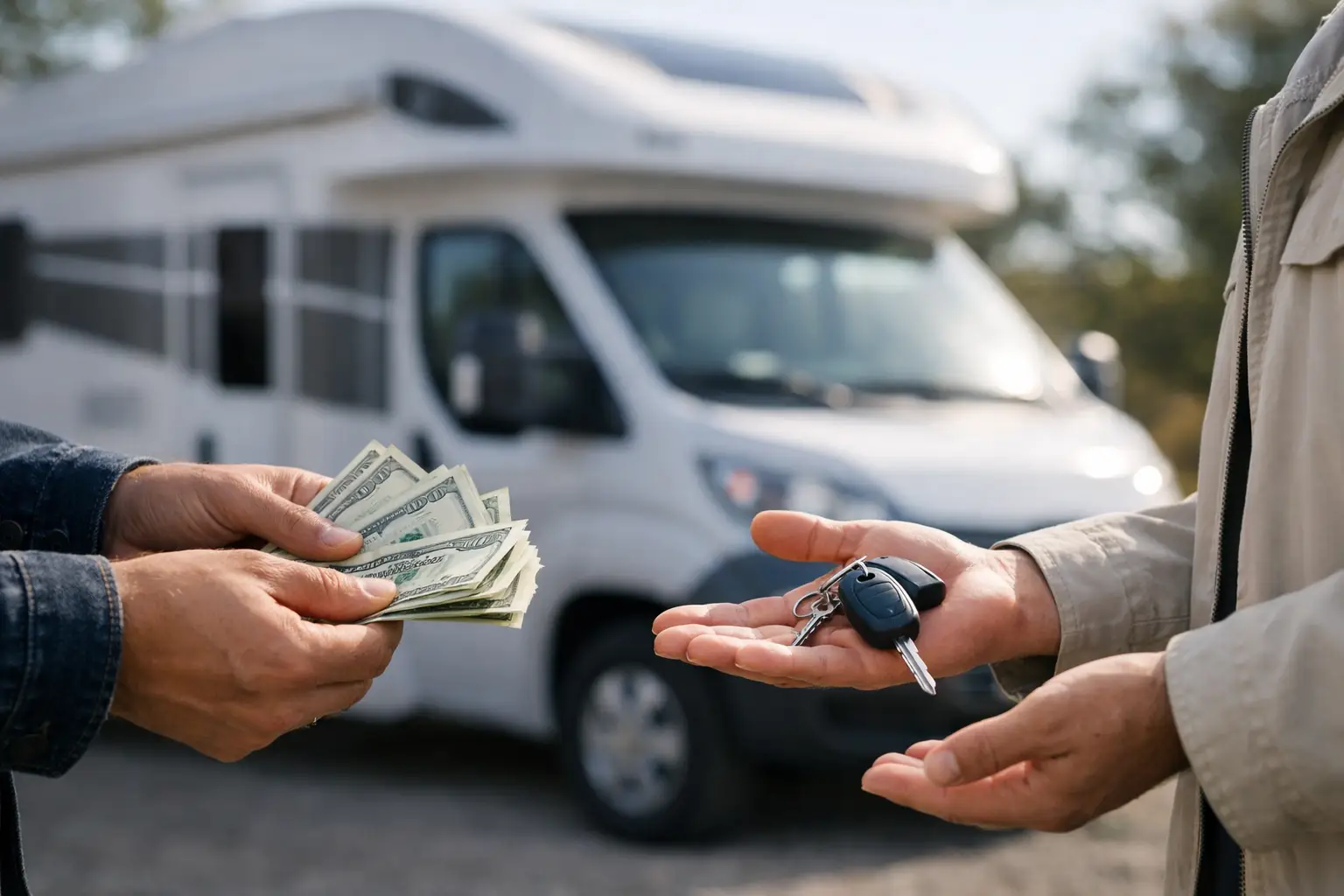
A buyer standing on your drive with a convincing banking app, a polite manner and a promise that the money is “on its way” can make a sale feel done. It is not done until the funds are visible and available in your own bank account. Cash payment safety matters particularly when selling a motorhome, campervan or caravan because these are high-value vehicles that can be collected and driven away quickly.
For many owners, the simplest route is not physical cash at all. It is a confirmed bank transfer, checked independently before keys, documents and the vehicle change hands. That approach gives both parties a clear record of payment and avoids the practical risks of handling a large bundle of notes.
Why “cash offer” and cash in hand are different
When professional vehicle buyers say they make a cash offer, they usually mean they will buy the vehicle outright rather than arrange a part-exchange, sale-or-return deal or finance package. The payment itself is often made by instant bank transfer.
That distinction is worth making. Physical cash is not automatically unsafe, but it creates extra work and uncertainty. You must count it carefully, consider whether the notes are genuine, transport it safely and then pay it into your bank. Depending on the amount, your bank may ask where the cash came from. None of this means a genuine buyer is doing anything wrong, but it is a less straightforward option for a motorhome sale.
A bank transfer is generally more practical, provided you verify it properly. It leaves a payment trail, avoids carrying large sums and lets you see the money before the vehicle leaves your possession. The key is to rely on your own bank account, not on an email, a screenshot or the buyer’s phone.
Cash payment safety starts before collection day
Most payment problems are easier to avoid before anyone arrives. A serious buyer should be willing to explain how and when they will pay, what paperwork they need and whether there are any conditions attached to their offer.
Be wary if a buyer is vague about payment, asks to collect before funds clear, wants to pay an unexpected third party, or keeps changing the agreed arrangement. The same applies if they pressure you to decide immediately or say that a banking issue means you must release the motorhome first. A genuine buyer understands why you need confirmation.
It also helps to agree the essentials in writing before collection: the vehicle registration, agreed price, collection date, known faults, included equipment and payment method. This does not need to be a complicated contract, but it prevents misunderstandings over items such as awnings, bikes racks, spare keys, manuals or personal belongings left in lockers.
If your motorhome has outstanding finance, say so early. The finance company remains involved until the agreement is settled, and you should not assume a private buyer will know how to handle it. A reputable direct buyer can explain how the settlement figure is dealt with and what evidence you should retain.
Never use the buyer’s proof as your proof
Fraudsters can create convincing payment screens, emails and text messages. Some may show a bank transfer as pending, while others use a message that looks as though it has come from your bank. Neither confirms that cleared money is available to you.
Check your bank account through the official banking app or by logging in directly yourself. Do not use a link sent by the buyer, even if it appears to be from your bank. If you are unsure whether a payment has arrived or is fully available, call your bank using the number on the back of your card or from its official website.
A buyer may say that a transfer takes time to show. That can happen, particularly if either bank carries out a security check. The sensible answer is simply to wait. Do not hand over the keys because a payment is pending, and do not feel awkward about it. Waiting protects everyone involved.
A safe handover process for motorhomes and campervans
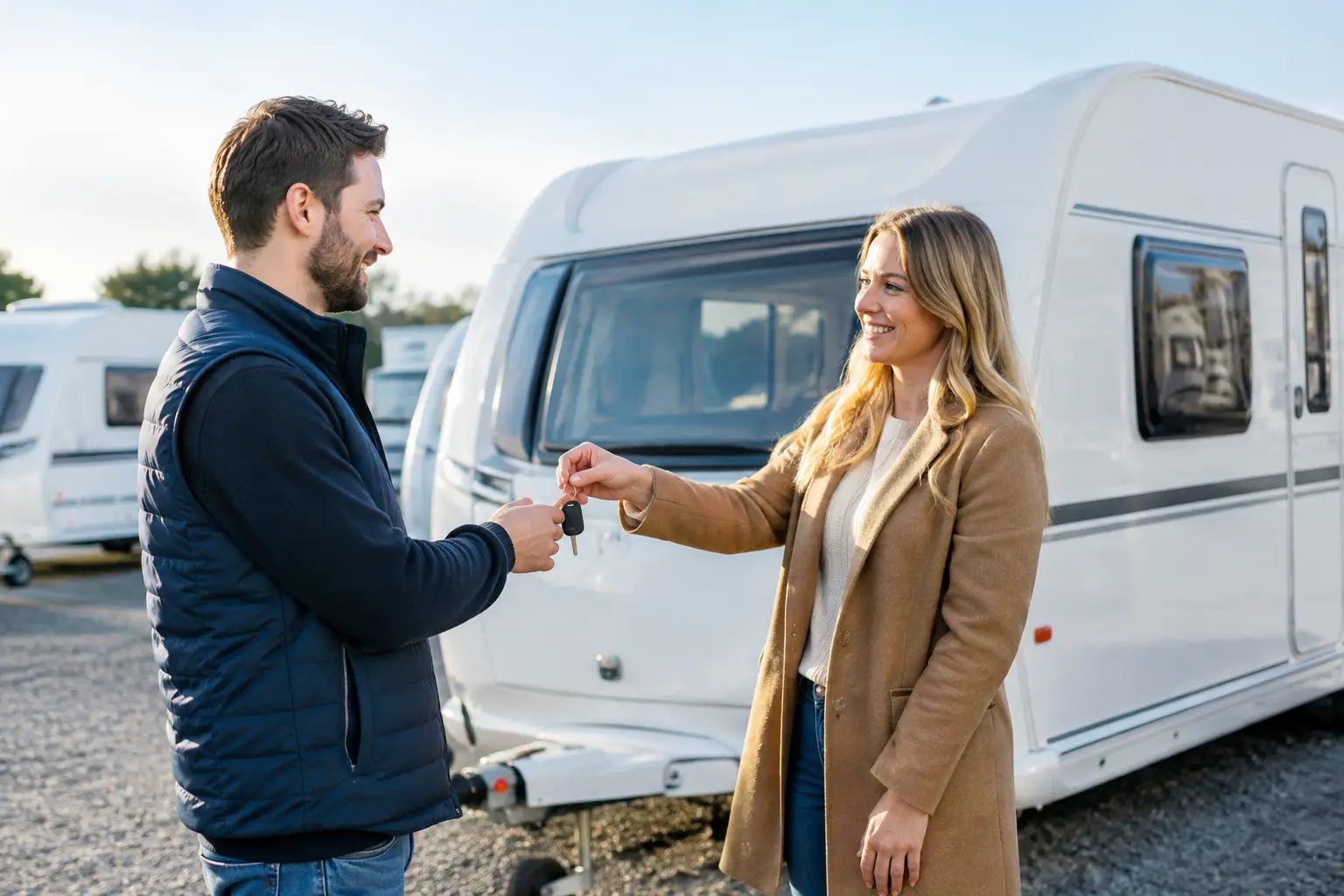
Collection day should be calm and organised, not rushed. Have the vehicle accessible, remove your personal possessions and keep the V5C, service paperwork, MOT records and keys together until payment is confirmed.
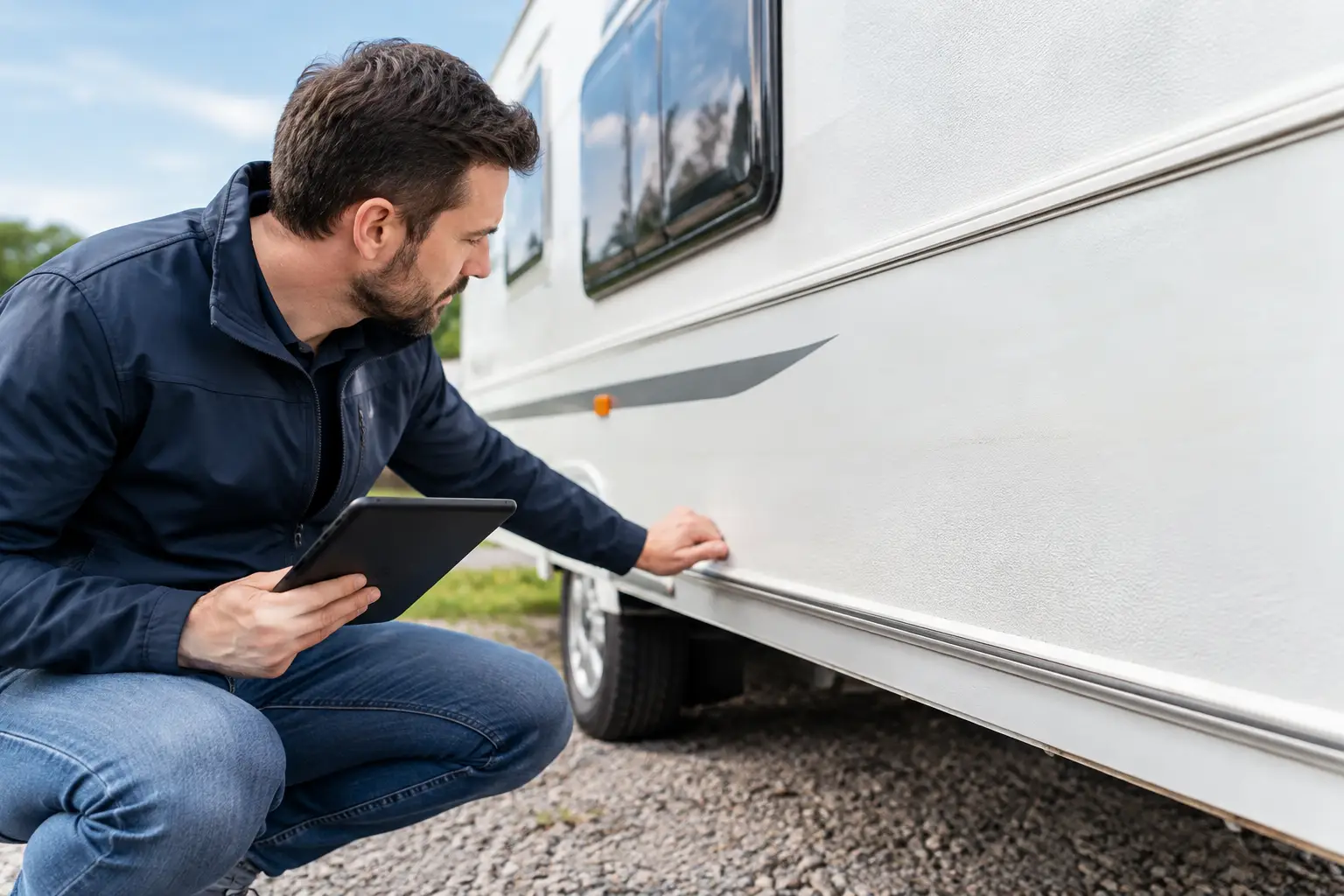
Once the buyer has inspected the vehicle and the final price is agreed, they can make the transfer. Check the amount, the account balance and the transaction details in your own banking app. If the payment is there and available, you can then complete the handover.
For added protection, keep a simple signed receipt showing the registration number, make and model, agreed price, date, time and both parties’ names. Note that the vehicle has been sold as seen if that reflects the agreement. This is useful even when the buyer is a professional business, as it creates a clear record for your files.
The ownership transfer is another part of a safe sale. Complete the relevant DVLA process as soon as possible and retain confirmation. Do not leave the paperwork for later simply because the collection has gone smoothly. Prompt notification helps make clear when your responsibility for the vehicle ended.
A practical handover has four parts:
- Confirm the final agreed price after inspection.
- See the cleared payment in your own bank account.
- Give a receipt and complete the DVLA ownership transfer.
- Hand over keys, V5C information and the vehicle only after those steps are complete.
This order may sound obvious, but it is where many private sales go wrong. Sellers are often focused on being helpful, especially when a buyer has travelled a long way. There is no need to apologise for following a sensible process.
Common scams to watch for
The most obvious risk is a false payment confirmation, but it is not the only one. Overpayment scams can involve a buyer sending more than the agreed amount and asking you to return the difference. If the original payment is fraudulent or later reversed, you may lose the money you sent back. Never refund an overpayment until your bank has confirmed exactly what has happened.
Another concern is a request for your online banking details, passcodes or security codes to “release” a payment. A genuine buyer does not need these. Your bank will not ask you to disclose security codes to a vehicle purchaser either.
Be cautious with remote buyers who arrange for a courier to collect the vehicle while someone else pays. There can be legitimate reasons for separate collection, but the arrangement needs extra checking. Know exactly who is buying, who is collecting and when the funds will be confirmed. If the story changes repeatedly, pause the sale.
Finally, do not let a test drive become an unaccompanied collection. Check that the driver is insured and keep control of the keys. For an expensive motorhome or campervan, it is reasonable to accompany the test drive or ask for suitable identification and insurance evidence first.
When a direct buyer is the safer option
A private sale can achieve a strong price, particularly for a sought-after vehicle in excellent condition. The trade-off is that you manage every enquiry, viewing, negotiation, test drive, payment check and paperwork detail yourself. For an inherited caravan, a non-runner, a damp motorhome or a vehicle that has been sitting unused, that can be more hassle than it is worth.
A direct purchase service reduces the moving parts. With WR Motorhomes, the process is built around a free valuation, a clear offer, free collection and instant bank-transfer payment before handover. The team can also support the DVLA transfer, which is helpful if selling a vehicle is not something you do regularly.
That does not mean you should stop asking questions. You should still confirm the final price, understand whether it changes after inspection and check payment in your own account. A trustworthy buyer will welcome those checks rather than make you feel difficult for carrying them out.
Keep control until the money is confirmed
Selling a leisure vehicle should not leave you worrying whether a payment will arrive after it disappears down the road. Whether you sell privately or to a professional buyer, set one clear rule: confirmed funds first, then paperwork and keys.
That small bit of discipline protects the value you have built up in your motorhome, campervan or caravan, and lets you move on knowing the sale has been handled properly.