A damp patch beside a window can be worrying enough. When the floor feels soft, wallboard has stained, or a leak has travelled through cupboards and corners, the thought of selling can feel even worse. The good news is that you can still sell water damaged caravan stock without spending months arranging repairs, answering awkward questions from private buyers or trying to tow an unsafe caravan across Scotland.
Water damage does affect value, but it does not automatically make a caravan worthless. A direct buyer can assess its age, make, layout, overall condition and the likely extent of the repair work, then make a realistic offer. For many owners, that is a more practical route than funding a repair with no guarantee the cost will be recovered at sale.
Can you sell a water damaged caravan?
Yes. Caravans with damp, leaks and visible water damage are bought and sold every day. The key is being honest about the condition from the start. Tell the buyer where you have seen water ingress, whether the caravan has been repaired before, and if it has been standing unused for a long time.
Damp can enter through failing window seals, roof lights, awning rails, corner mouldings, roof joints or damaged panels. Sometimes the problem is localised and repairable. In other cases, moisture has spread into the timber frame, insulation, floor or internal furniture. Until the caravan is inspected, it is difficult to know the full scale of the work, which is why a private-sale price can be hard to agree.
A professional buyer expects condition issues to be part of the conversation. The offer will reflect the repair risk and the resale market, but you avoid paying out for a speculative repair simply to attract buyers.
Why private buyers often walk away
Selling a clean, dry touring caravan privately takes time. Selling one with damp can be far more demanding. Many buyers will arrange a viewing, notice a smell or soft panel, and leave without making an offer. Others may offer a very low figure after travelling to see it, particularly if the extent of the issue was not clear in the advert.
There is also the practical problem of collection. A caravan with floor damage, old tyres, failed lights or no current roadworthiness may not be suitable for a buyer to tow away. If it has been off the road for years, getting it ready for viewings can become a job in itself.
Repairing before sale is not always the wrong decision. A newer, desirable caravan with a small, confirmed leak may justify professional work, especially where paperwork supports the repair. But extensive water ingress can be expensive to put right, and cosmetic improvements do not necessarily deal with hidden damp. It depends on the caravan’s age, condition and likely resale value.
What affects the value of a water damaged caravan?
No honest buyer can value every damp caravan the same way. The make, model, year and layout still matter. A popular family layout with fixed bunks or a modern touring caravan may retain stronger demand than an older model with widespread structural damage.
The location and severity of the water damage are equally important. A small leak around a roof light is different from soft flooring throughout the caravan. Signs of long-term ingress, mould, delamination, damaged furniture or a weakened chassis area will reduce the offer because more labour and materials are needed to make the unit safe and presentable.
The rest of the caravan also counts. Working appliances, good tyres, usable upholstery, complete keys, manuals and a V5C can all help. A missing service record is not necessarily a barrier, and neither is a caravan that needs attention in other areas. It simply gives the buyer a clearer picture of what they are taking on.
Be clear about the damage when asking for a valuation
You do not need to be a caravan engineer to request a valuation. Clear, straightforward information helps a buyer make a quicker and fairer decision. If possible, have the registration number, make, model, year and your postcode ready. Mention whether it is stored at home, on a site or in storage, and whether it can be moved safely.
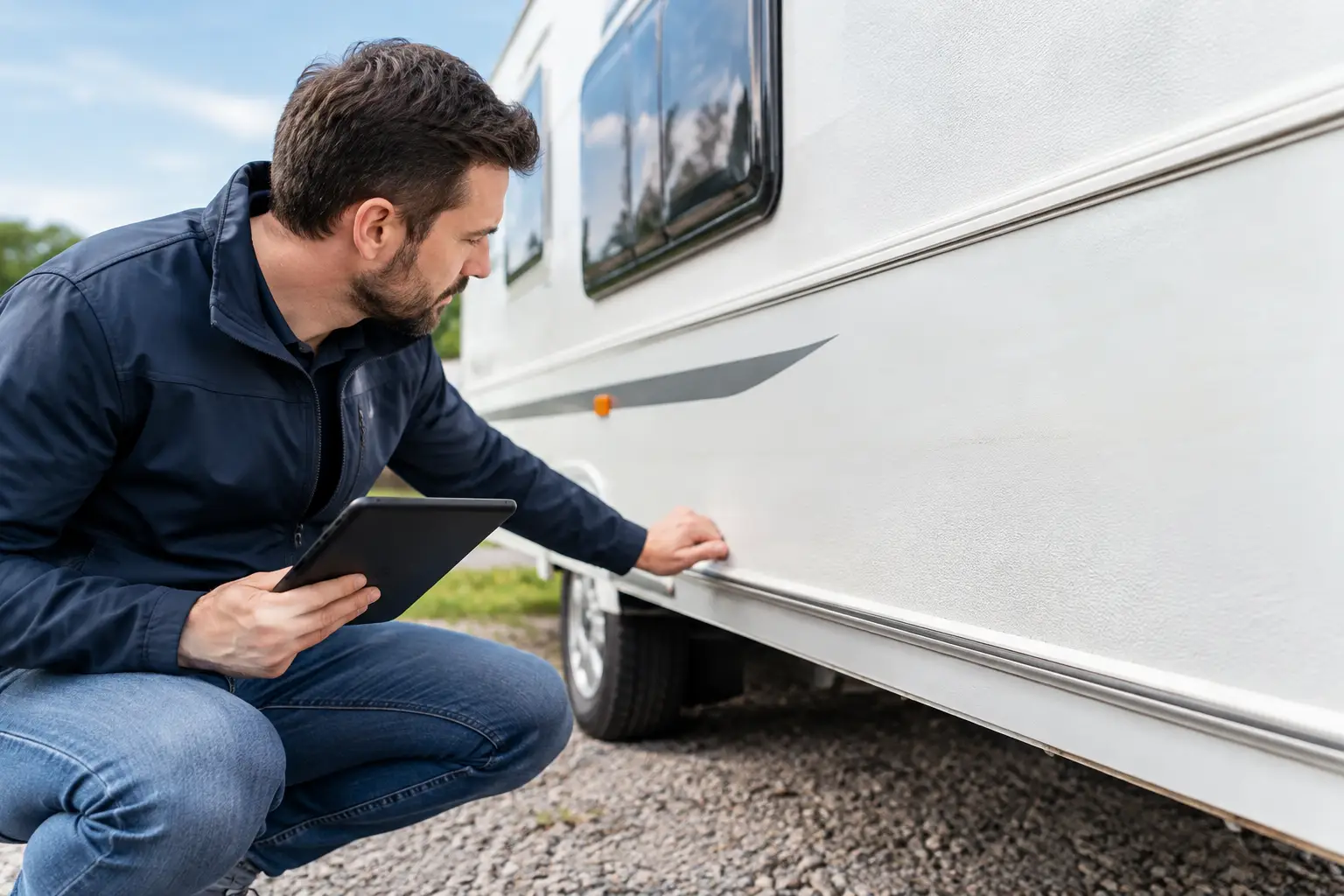
Photos are useful too. Take pictures of the exterior, each side of the caravan, the interior, affected areas, the floor, any stains and obvious signs of leaks. There is no benefit in hiding damage. A buyer who knows what to expect can plan collection properly and is less likely to alter the arrangement when they arrive.
If you are unsure whether an area is damp, say so. Describe what you can see or feel, such as bubbling wallboard, a musty smell, staining around a window or a spongy corner of the floor. Simple details are more useful than guessing at a diagnosis.
How a direct sale removes the hard work
For owners who want a clean, fast exit, a direct purchase removes most of the usual private-sale obstacles. WR Motorhomes buys caravans in all conditions, including damp and water-damaged examples, older units, MOT failures, accident-damaged caravans and non-runners.
The process is designed to be clear from the outset:
- Request a free, no-obligation valuation and describe the caravan honestly.
- Receive a competitive cash offer based on the information provided and its condition.
- Agree a convenient collection time, with free collection available across Scotland.
- Receive instant bank-transfer payment and complete the ownership paperwork before the caravan leaves.
There are no classified adverts to write, no strangers visiting your drive, no dealer commission and no need to negotiate with a succession of people who may never turn up. For a caravan that cannot be towed or has been sitting unused, collection is often the biggest relief.
What about paperwork, finance and collection?
A V5C is helpful but do not assume a missing document means the caravan cannot be sold. Explain what paperwork you have, along with any proof of ownership, manuals, keys and service documents. A reputable buyer will explain what is needed to complete the transaction correctly.
If there is outstanding finance, raise it before agreeing a sale. This does not always prevent a purchase, but the settlement amount and lender requirements need to be checked. Being open early protects everyone from delays on collection day.
Collection arrangements depend on where the caravan is stored and its condition. A water-damaged caravan may have flat tyres, seized brakes or an unsafe floor, so it is sensible to mention these points during valuation. The collection team can then bring suitable equipment rather than expecting the caravan to be ready for a straightforward tow.
Do not spend money just to make it look saleable
It is tempting to cover stains, replace a panel or use strong air freshener before selling. Cleaning out personal belongings and making the caravan accessible is sensible. Trying to disguise water damage is not. Damp is often found during inspection, and hidden faults can lead to a failed sale or an argument over the agreed price.
A better approach is to keep the caravan safe, dry where possible and easy to inspect. Remove valuables, locate the keys and paperwork, and be ready to explain what you know. That gives you the best chance of receiving a prompt, realistic offer with no fees or hidden costs.
A water-damaged caravan may no longer suit your plans, but it does not need to become an ongoing burden on the drive or storage pitch. A clear valuation, secure payment and properly arranged collection can give you a straightforward way to move on.