A motorhome can look straightforward to sell until the advert goes live. Suddenly, there are photo requests, messages at odd hours, viewers who want a weekend test drive, and offers that fall away after a long journey. If you are weighing up a private sale or motorhome dealer, the right choice comes down to more than the headline price. It is about how much time, risk and uncertainty you are willing to take on.
For some owners, selling privately is worthwhile. For others, particularly where a vehicle is unused, damaged, inherited or difficult to move, a direct sale to a professional buyer is the practical route. Here is what to consider before you decide.
Private sale or motorhome dealer: the key difference
A private sale gives you control over the asking price and the way you market your motorhome, campervan or caravan. If it is clean, desirable, well-documented and ready for the season, you may be able to achieve more than a trade offer. The trade-off is that you take responsibility for every part of the sale.
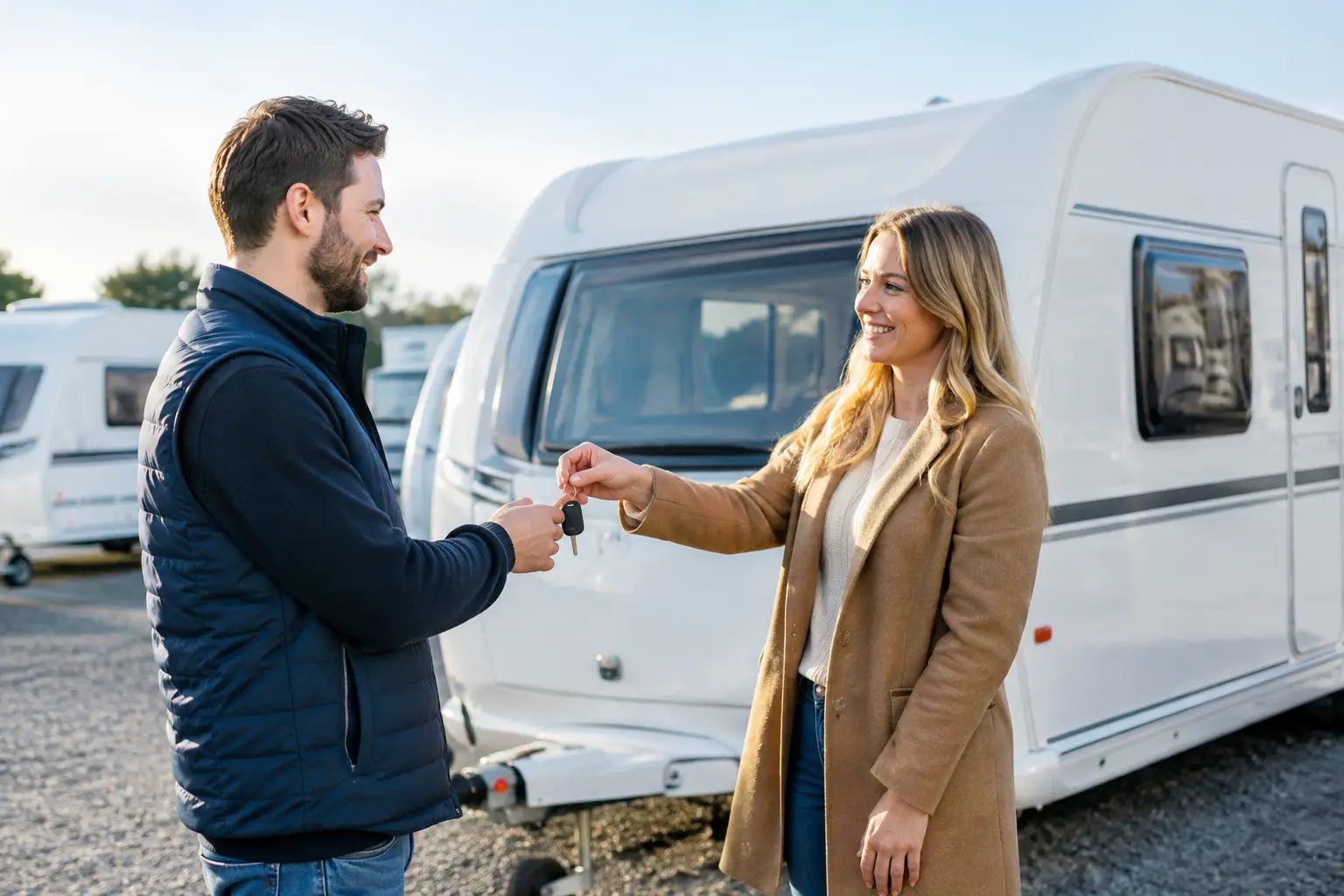
That means preparing the vehicle, taking photographs, writing the advert, replying to enquiries, arranging viewings and negotiating. You also need to be confident that payment is genuine, that the buyer understands what they are purchasing, and that the DVLA paperwork is completed correctly.
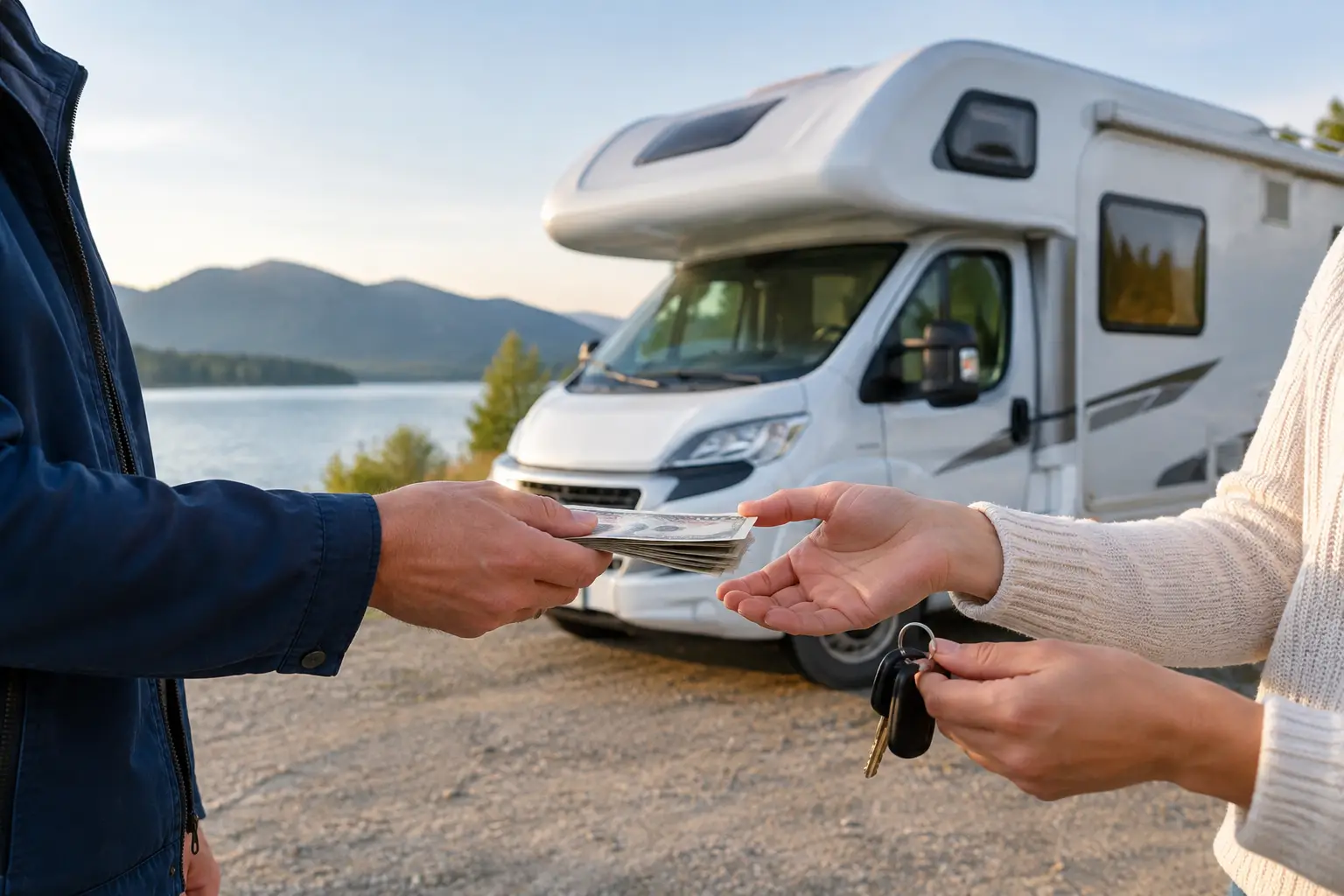
Selling to a motorhome dealer or direct-buy specialist is different. You receive a valuation and an offer based on the vehicle’s age, model, condition and current demand. If you accept, the buyer handles collection and the ownership-transfer process, with payment made before the vehicle leaves. The offer may not match the highest private asking price, but it removes much of the work and waiting.
Neither route is automatically best. The useful question is: what will the private sale really cost you in time, preparation and peace of mind?
When a private sale may suit you
A private sale can be a sensible option if your motorhome is in excellent order, has a full service history, a current MOT where applicable, and no significant damp, accident or mechanical concerns. Popular layouts, sought-after campervan conversions and newer models can attract strong interest when priced realistically.
It also helps if you have the time to manage the process. Leisure vehicles are not like selling an everyday car. A serious buyer may want to inspect every locker, test the heating, check appliances, look for signs of water ingress and ask detailed questions about payload, servicing and habitation checks. That is reasonable, but it takes time.
Private selling is often better suited to owners who are not under pressure and are comfortable waiting for the right buyer. If you can safely store the vehicle, arrange viewings during daylight and deal with negotiation, you may decide the extra effort is worthwhile.
Be realistic about the figure you are comparing, though. An advertised price is not a completed sale price. Buyers often expect room to negotiate, and a motorhome advertised for several weeks may need price reductions before it sells.
The hidden workload of selling privately
The first challenge is presentation. Most buyers expect a motorhome or caravan to be clean, dry and ready to inspect. If it has been sitting on a driveway or in storage, you may need to deal with flat batteries, tyre condition, damp smells, expired gas bottles or an overdue MOT before anyone will make a serious offer.
Then there is the practical side of viewings. You are inviting strangers to inspect a valuable vehicle, often at your home. A genuine buyer will usually want time to look around and may request a test drive. You need to check insurance arrangements, retain control of the keys and avoid handing over the vehicle until cleared funds are in your account.
Payment is another area where caution matters. Do not rely on screenshots, promises that a bank transfer is pending, or unfamiliar payment methods. Check your own bank account directly before releasing the motorhome and its documents. A buyer who is rushing you to hand over the keys before funds are cleared is not making the transaction easier.
Finally, there is the paperwork. You should complete the V5C transfer correctly and tell the DVLA when the vehicle has changed hands. Keep a written record of the sale, including the date, agreed price, vehicle registration and the buyer’s details. If there is outstanding finance, it must be settled properly before ownership can be transferred.
Why a dealer sale is often the easier route
A professional buyer is not just paying for the vehicle. They are also taking on the work and risk that follows: collection, preparation, repairs, resale, warranty exposure and the time it may take to find the next owner. That is why a dealer offer and a private-sale asking price will rarely be identical.
In return, a direct sale can give you a fixed outcome quickly. There is no need to advertise, clean the vehicle to showroom standard, organise repeated viewings or wait for a buyer to arrange finance. This can be particularly helpful if you have stopped using the motorhome, need the driveway space, or are dealing with a family member’s estate.
At WR Motorhomes, the process is designed around that certainty. A free valuation is followed by a competitive cash offer, with no fees or hidden costs. Once an offer is agreed, collection is arranged across Scotland and instant bank-transfer payment is made before the vehicle is taken away. The team also supports the DVLA ownership transfer, so you are not left wondering what happens after collection.
For many sellers, the value is not only in speed. It is in knowing that the transaction is managed from first conversation to final paperwork.
Difficult condition does not always mean unsellable
This is where the choice between private sale and a motorhome dealer can become clear. Private buyers generally want a vehicle they can use immediately. Even a modest issue can put them off, especially if they are unfamiliar with repairs or worried about unexpected costs.
Damp, water damage, a failed MOT, engine problems, accident damage or an incomplete service history can make private selling slow and frustrating. You may receive low offers from buyers who assume the worst, or arrange viewings with people who walk away as soon as they spot the problem.
A specialist buyer can assess the vehicle as it stands and give you a realistic figure based on its actual condition. Older motorhomes, non-runners, insurance write-offs, off-road campervans and touring caravans can still have value. The key is being open about faults from the outset. Clear information leads to a fairer valuation and avoids surprises on collection day.
You do not need to spend money repairing every issue simply to make a sale. Sometimes repairs are worthwhile, particularly for a newer, well-kept vehicle with a small and clear fault. In other cases, paying for work, transport and storage simply adds to the cost of an already unwanted motorhome.
Think about your net result, not only the offer
The highest figure is not always the best result. A private sale may bring more money, but subtract any advert costs, servicing, valeting, repairs, storage, insurance and the value of your own time. Consider the risk of a buyer changing their mind after you have held the vehicle, or trying to renegotiate when they arrive.
A dealer sale gives you a lower-effort, known figure. It can be the better financial decision when the vehicle needs work, when you need it gone promptly, or when the difference between a realistic private sale price and a direct offer is smaller than expected.
If you do seek valuations, give the same honest details to everyone: registration, mileage, model, service history, known faults, outstanding finance and whether it is driveable. That makes comparisons meaningful. An attractive initial figure that changes later because key details were not discussed is not a good offer.
Choose the route that gives you confidence
There is no prize for handling a private sale if it leaves you with weeks of messages, awkward viewings and uncertainty over payment. Equally, there is no reason to accept the first offer you receive without understanding how it was reached.
If your motorhome is tidy, in demand and you have time on your side, private selling may suit you. If you want a fast, secure and straightforward sale, especially for a vehicle with faults or no recent use, a professional motorhome buyer can take the pressure away. Start with an honest valuation, ask how payment and collection will work, and choose the option that lets you move on with confidence.