A campervan that once meant weekends away in Aviemore, trips to the coast or family holidays can quickly become a costly unused vehicle on the drive. If you want to sell a campervan, owners in Scotland can do so without advertising, viewings or payment worries; a direct sale can be a far simpler route than trying to manage a private listing.
That is particularly true when circumstances have changed. Perhaps you are downsizing, have inherited a vehicle, no longer have time to travel, or have a campervan that needs work before it can be used again. Whatever the reason for selling, the key is knowing what affects the value, what paperwork is needed and how to make sure the sale is secure.
Why private campervan sales can take longer than expected
Selling privately may bring the prospect of a higher price, but it also puts the work and risk with the owner. A campervan advert needs clear photographs, an accurate description and a realistic asking price. Then come messages at all hours, buyers who want to negotiate before they have seen the vehicle, and viewings that may not lead anywhere.
There is also the practical side. Buyers often want a test drive, a detailed inspection and evidence of servicing, habitation checks and MOT history. That is reasonable, but it can be stressful when you are unfamiliar with the process or simply want the vehicle gone promptly.
A private sale can still suit a newer, desirable campervan in excellent condition if you have time to wait for the right buyer. It is less appealing when the van is off the road, has damp, needs an MOT, has been sitting unused or is difficult to move. In those cases, a direct buyer offers certainty rather than an open-ended selling process.
Sell a campervan in Scotland through a direct buyer
A direct purchase is designed for owners who value a clear, managed transaction. Rather than advertising the vehicle and hoping a buyer follows through, you provide the details, receive an offer and arrange collection if you wish to proceed.
At WR Motorhomes, the process begins with a free, no-obligation valuation. The more information you can provide – make, model, registration, mileage, condition and any known faults – the more accurately the vehicle can be assessed. Honest details help avoid surprises later and make for a fairer offer from the outset.
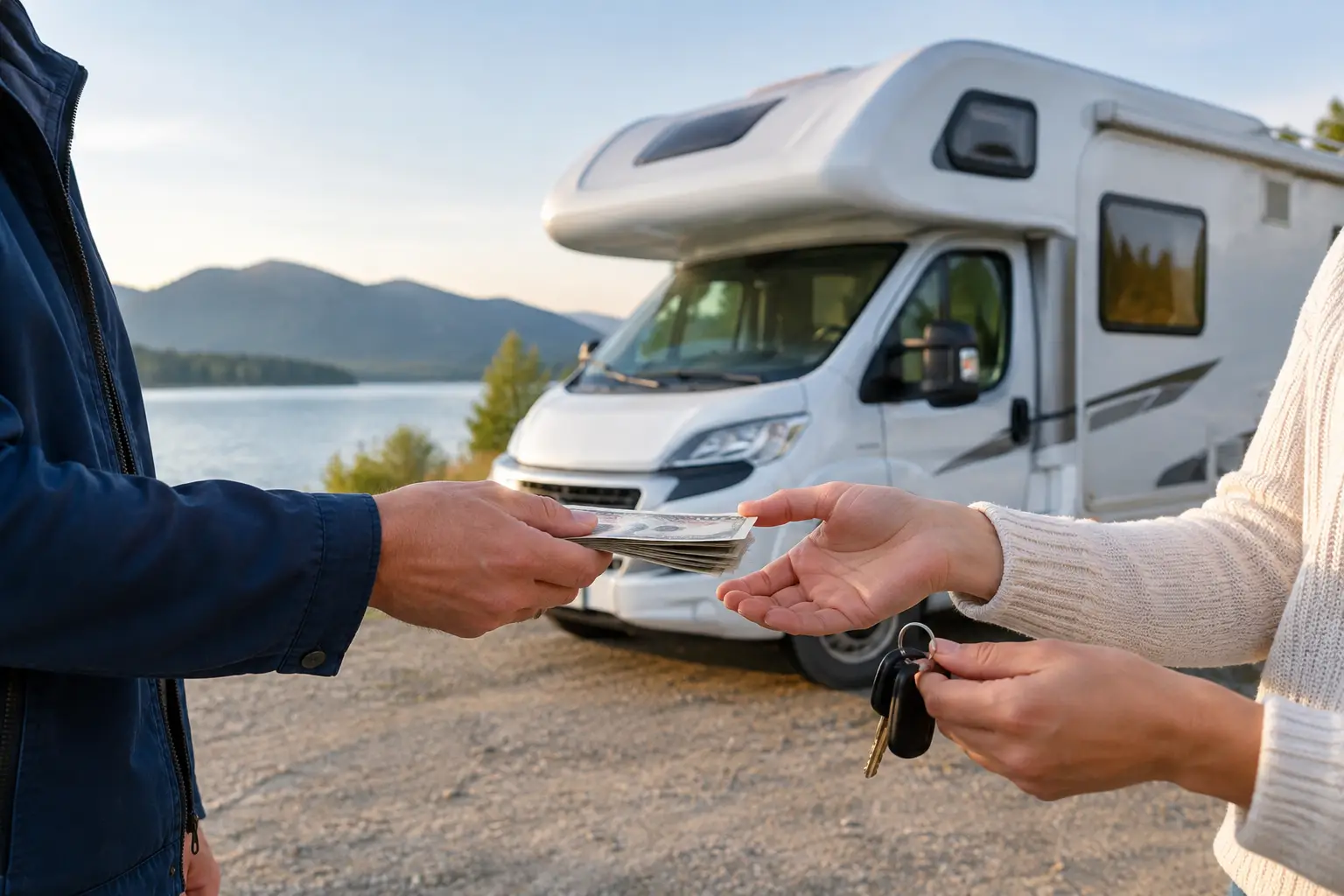
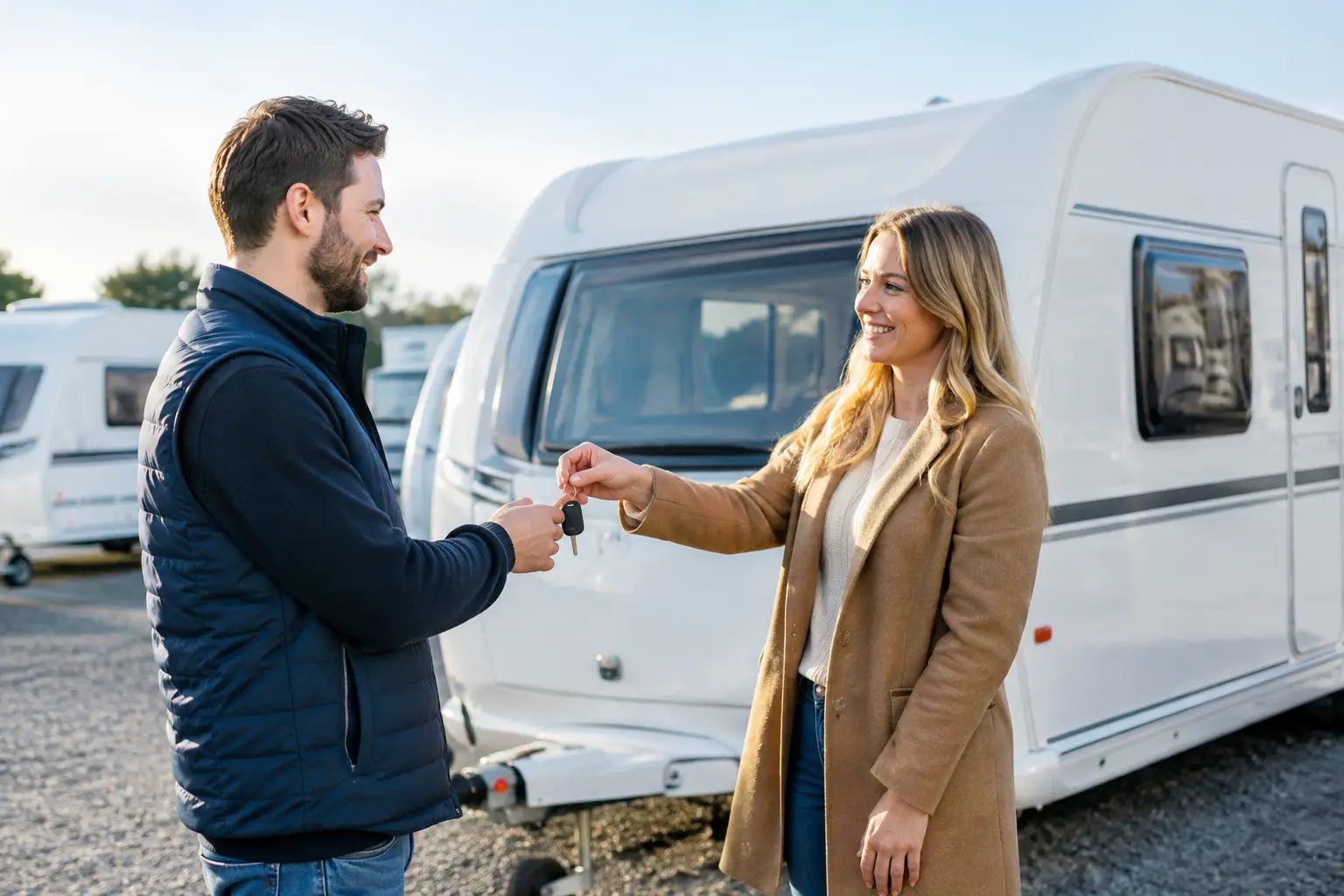
If the offer works for you, collection is arranged from your address anywhere in Scotland. Payment is made by instant bank transfer before the vehicle is handed over, and the ownership transfer can be completed with support for the DVLA paperwork. There are no advertising costs, collection charges or last-minute commission fees.
For many owners, that certainty has value in its own right. You know who is buying the campervan, when it will be collected and how the funds will be paid.
What affects your campervan’s value?
There is no single figure that applies to every campervan. Two vehicles of the same age can be worth very different amounts depending on their base vehicle, conversion quality, mileage, maintenance and condition.
Popular layouts, a good service record, recent tyres, a current MOT and working habitation equipment can all help. Factory-built campervans and well-regarded conversions often attract strong demand, while VW campervans, coachbuilt motorhomes, A-class and B-class models each have their own market.
Condition matters, but it does not mean a vehicle has to be perfect to be saleable. Damp, water ingress, accident damage, engine faults and failed MOT items will affect the offer because repairs carry a cost and risk. They do not automatically make the campervan worthless. A realistic buyer will assess the vehicle as it stands rather than expecting you to spend money repairing it first.
Age is also not a reason to assume nobody will buy. Older campervans can be attractive projects, useful donor vehicles or straightforward holiday vans. The right value depends on the whole picture, not just the registration year.
Be open about faults and missing history
It is tempting to focus only on the good points when requesting a valuation, especially if the van has an issue you hope will be minor. In practice, being upfront is the best way to receive an offer that can be honoured.
Mention known damp, warning lights, accident damage, non-starting issues, missing keys, incomplete service history or a lapsed MOT. Photographs of affected areas are useful where possible. A professional buyer would rather understand the condition early than waste your time with an unrealistic figure.
This approach is especially helpful for insurance write-offs, non-runners and vehicles with extensive water damage. These can be hard to sell through normal adverts, where many enquiries disappear as soon as the problem is disclosed. A direct purchase removes the need to persuade a succession of private buyers to take on a project.
Paperwork, finance and payment questions
The V5C is helpful because it records the registered keeper, but a missing V5C does not always prevent a sale. You should explain the situation at the valuation stage and be prepared to provide suitable identification and ownership information. It may take a little longer to complete the checks, but it is better to address it before collection day.
If the campervan has outstanding finance, do not ignore it. The finance provider remains involved until the agreement is settled, and you cannot simply pass that responsibility to a buyer. Give the settlement figure and lender details early so the sale can be considered properly. Depending on the vehicle value and finance balance, a direct buyer may be able to help organise a settlement as part of the transaction.
Payment security deserves just as much attention. Never release a vehicle based on a screenshot, an email confirmation or a promise that money is on its way. Check that cleared funds are visible in your own bank account before handing over keys, documents and the campervan. Instant bank transfer gives both sides a clear record of the payment and avoids the uncertainty of cash or unfamiliar payment methods.
Prepare your campervan for collection without spending unnecessarily
You do not need to professionally valet a vehicle or repair every defect before selling it. A clean, honest presentation is enough. Remove personal belongings, take out old paperwork containing private information and gather the keys, manuals, service invoices and spare accessories you still have.
It also helps to make a note of anything included in the sale, such as an awning, bike rack, hook-up lead, levelling ramps or fitted security equipment. These items can add convenience and sometimes value, but only if the buyer knows they are there.
Avoid spending hundreds of pounds on cosmetic work purely to chase a slightly higher offer. Major repairs rarely return their full cost when you are selling quickly. The exception is when a simple, low-cost fix makes the campervan safer to move or resolves an issue that is clearly affecting its value. If you are unsure, ask for a valuation first and decide with the facts in front of you.
A better option when time matters
There are times when waiting for the best possible private-sale price makes sense. There are also times when a straightforward, confirmed sale is the better outcome. If storage costs are mounting, an MOT has expired, a repair bill is looming or an inherited campervan needs dealt with, speed and certainty can matter more than another month of enquiries.
Free collection is particularly valuable for non-runners and vehicles parked some distance from a dealer. You do not need to arrange recovery, insure it for a journey or find someone willing to transport it. The collection can be planned around a suitable time, with payment and ownership transfer handled as part of the same appointment.
Whether your campervan is a well-kept touring vehicle or a project that has been left standing, an accurate valuation is the sensible first step. A clear offer gives you the information needed to decide, without committing you to a sale before you are ready.